The task
Dormer Pramet produces millions of cutting inserts a year in tens of thousands of variants. Quality control relied on manual inspection under a microscope. Defects could stay undetected until final inspection, or reach the customer. Microscopic cracks are invisible to the naked eye, and there was no detailed defect data to improve production.
What we built
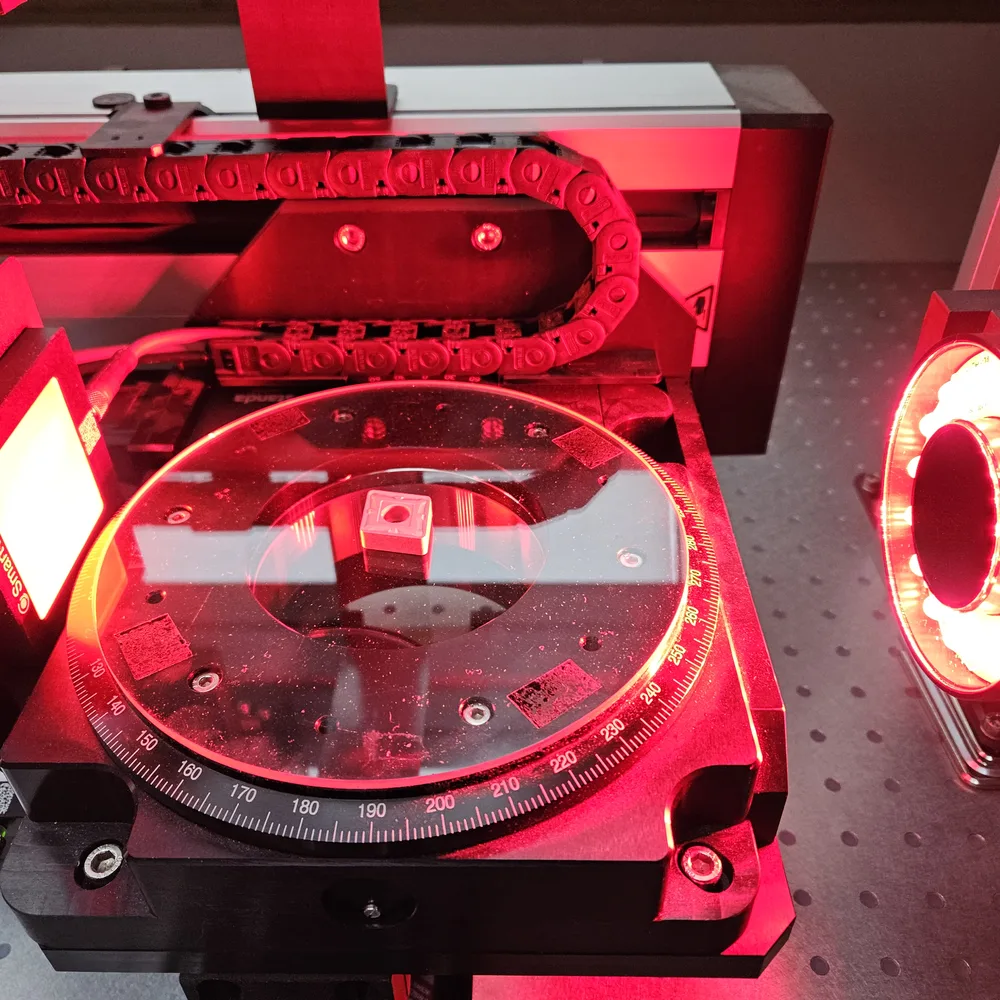
We started in the press shop, where catching a defect early saves the most. A high-resolution camera with a macro lens sees defects as small as 10 μm. Motorized platforms move each insert under the camera and the software stitches the overlapping images into one view.
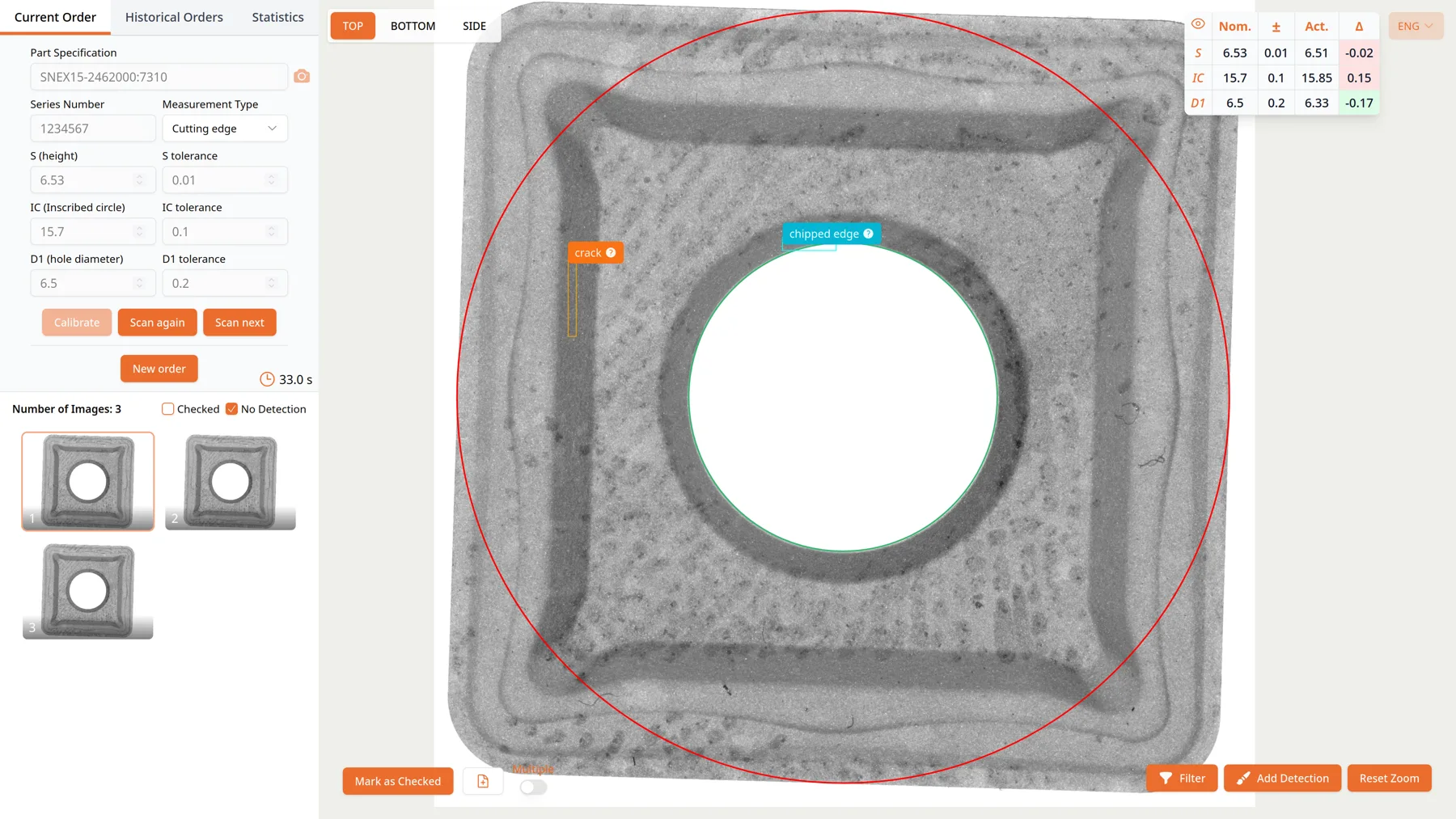
The core is a deep-learning model that generalizes across the whole portfolio without tolerance rules for each variant. The station talks to the robotic arm in the press: it signals which piece is good or defective and when to load the next one.
Operators mark and classify results in a simple app. Their feedback trains the model further, so it keeps adapting to the line.
The result
- 99% defect detection success rate against the required 92%, and still improving with new data
- Inspection frequency increased more than ten times
- Scrap rate reduced by more than 60%
- Detects defects missed by operators
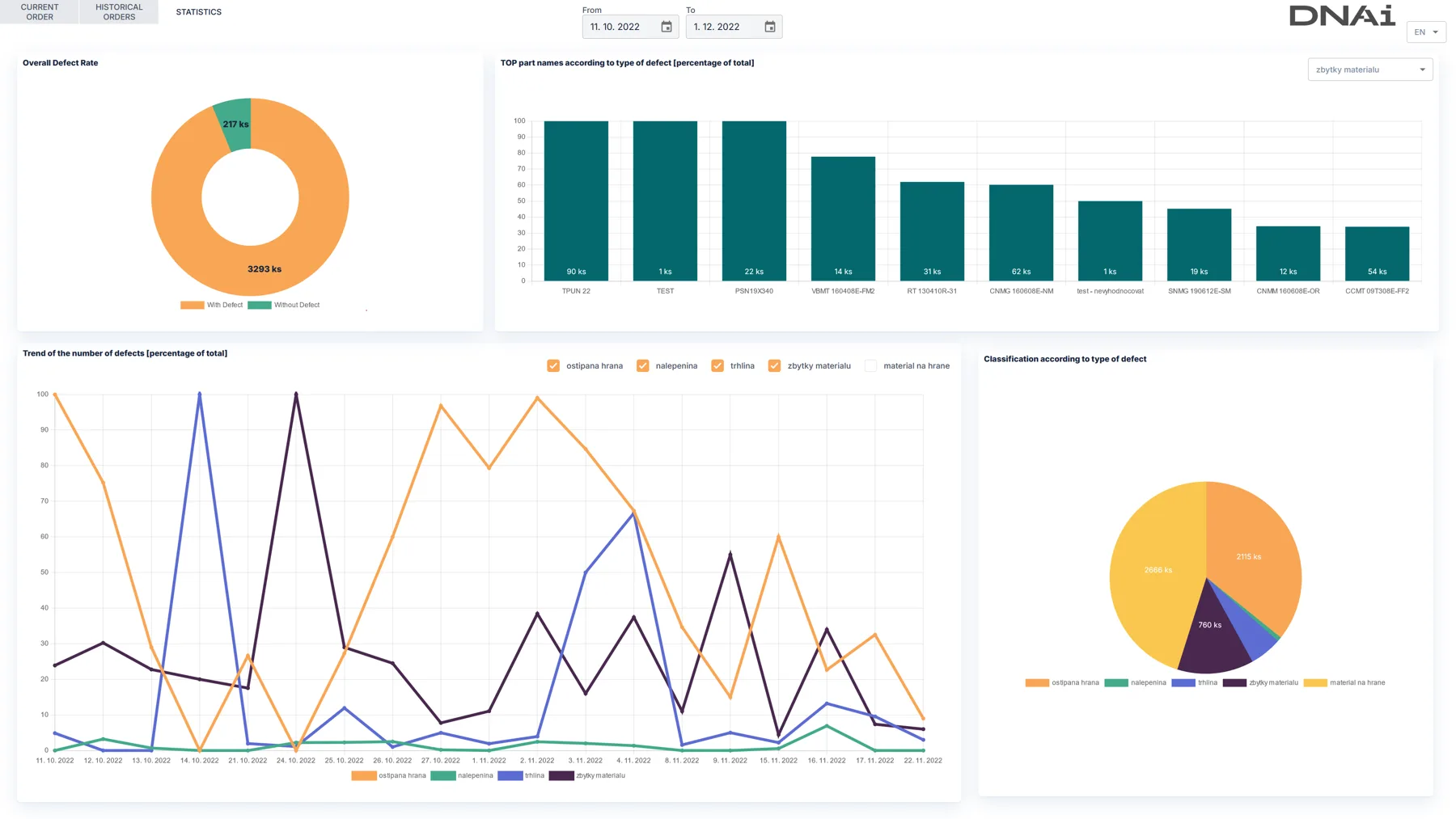
- Defect data and trends for improving production